
Understanding how patterns developed, not just managing the symptoms.
Relational ruptures rarely happen all at once. They accumulate until the distance between people feels too settled to question. This work is for couples and families who want to understand how their patterns developed, not just manage the symptoms of them.
Areas of particular focus include family estrangement, communication breakdown, intergenerational patterns, the relational impact of chronic illness or trauma, and the adaptations people develop in dysfunctional systems that travel into every other relationship afterward.
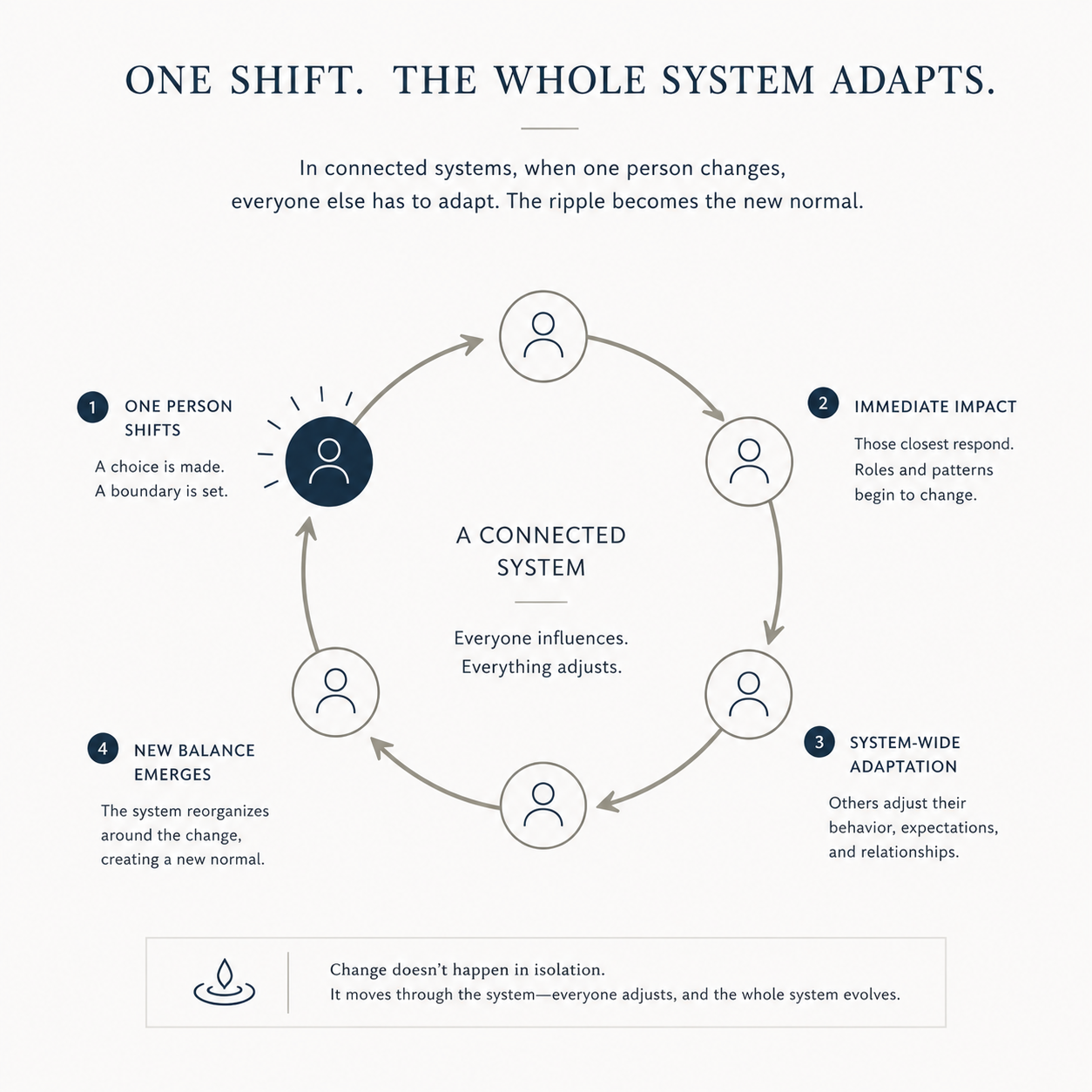
Families are interconnected systems, and every person's actions influence the people around them. That can feel discouraging when others are unwilling to participate in change, especially when there are longstanding patterns or power imbalances. Yet it also means that meaningful change does not require everyone to be in the room.
As you develop new ways of responding, communicating, and managing relationship dynamics, the system can no longer operate exactly as it did before. Others may resist, accommodate, or adapt, but the existing pattern is disrupted.
So while you cannot control others' choices, positive changes in your own functioning often create new possibilities for the relationships around you. This means therapy can still be valuable—even if you're the only one willing to come.
Estrangement is one of the most privately carried experiences there is. The cultural pressure to maintain family contact regardless of cost is pervasive, and people navigating it often absorb enormous shame along with it. The decision to estrange is rarely dramatic. It is usually a slow, exhausted arrival after years of trying, adjusting, hoping, and building up hurt.
I work with people who are considering estrangement, living it, grieving it, or trying to understand what went wrong well enough to stop handing the same patterns to everyone else. This work is available to both the person who estranged and the family left behind. Estrangement does not have to mean a permanently closed door. It can mean a closed one for now.
Read more about working with family estrangement →Yes. Both the person who estranged and the family left behind.
No. Private pay only. Superbills available for out-of-network reimbursement. FSA and HSA cards accepted.
Fully remote via secure telehealth. Licensed in Connecticut, with New York licensure in process for fall 2026.